September 14–18, 2026
This week, U.S. supply chains continued to face pressure from strong import demand, tightening inland capacity, elevated fuel costs and geopolitical uncertainty.
1️⃣ U.S. Container Imports Continue to Rise
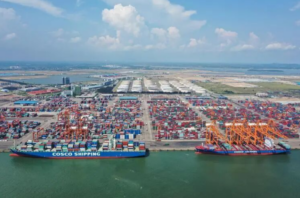
U.S. containerized imports reached approximately 2.6 million TEUs in August, up 3.8% from July and ranking as the third-highest monthly level of the year.
Strong volumes were recorded across West Coast, East Coast and Gulf Coast gateways.
2️⃣ Long Beach Handles Nearly 920,000 TEUs
The Port of Long Beach processed 919,992 TEUs in August, its fifth-busiest month ever.
Imports increased 3.6% year over year, highlighting continued strength in U.S. inbound cargo flows.
3️⃣ Asia–U.S. East Coast Rates Approach $11,000/FEU
Ocean spot rates from Asia to the U.S. East Coast reached approximately $10,948 per FEU.
Rising bunker fuel costs, geopolitical risks and pre-Golden Week shipments are putting additional pressure on ocean freight costs.
4️⃣ U.S. Trucking Capacity Tightens
The national Outbound Tender Rejection Index climbed to 14.32% after Labor Day.
For importers, this means port arrival does not necessarily translate into immediate inland delivery. Drayage, rail and warehouse capacity are becoming increasingly important parts of the supply-chain equation.
5️⃣ U.S.–China Trade Talks Enter a Critical Week
President Donald Trump and Chinese President Xi Jinping are scheduled to meet in Washington on September 24.
Trade discussions are expected to include tariffs, agricultural purchases, critical minerals, technology restrictions and fentanyl-related issues.
6️⃣ Energy Disruptions Continue to Affect Shipping
Commercial traffic through the Strait of Hormuz remains significantly below its recent average, keeping pressure on global energy and shipping markets.
📌 Key Takeaway:
U.S. logistics costs are being driven by more than cargo volume.
Strong imports + tight inland capacity + higher fuel costs + geopolitical risks + tariff uncertainty
are now interacting at the same time.
For importers, visibility across the entire supply chain—from tariff classification and customs compliance to ocean freight, port operations, trucking and final delivery—is becoming increasingly important.